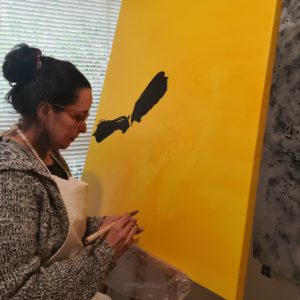
Roberta Queiroga
For Roberta Queiroga, becoming an artist was not a straightforward path. Over the years she became an architect, changed careers and there was a long artistic hiatus while she was experiencing life and absorbing her surroundings, creating her library of emotions to later express through her art.
The people Roberta met, the cultures and countries she visited and lived in, the spatial understanding, the materiality and architectural aesthetics. Every little thing combined and stored in her heart has been a valuable asset to her journey.
Roberta now works on a symbiosis, often with her hands directly onto the canvas, as a bridge to her heart, allowing for her emotion to spontaneously flow with a minimum interference.
Roberta has exhibited at the Auckland Museum and was a finalist at some prestigious art prizes such as Parkin Prize.
Other links:
Artworks by Roberta Queiroga
-
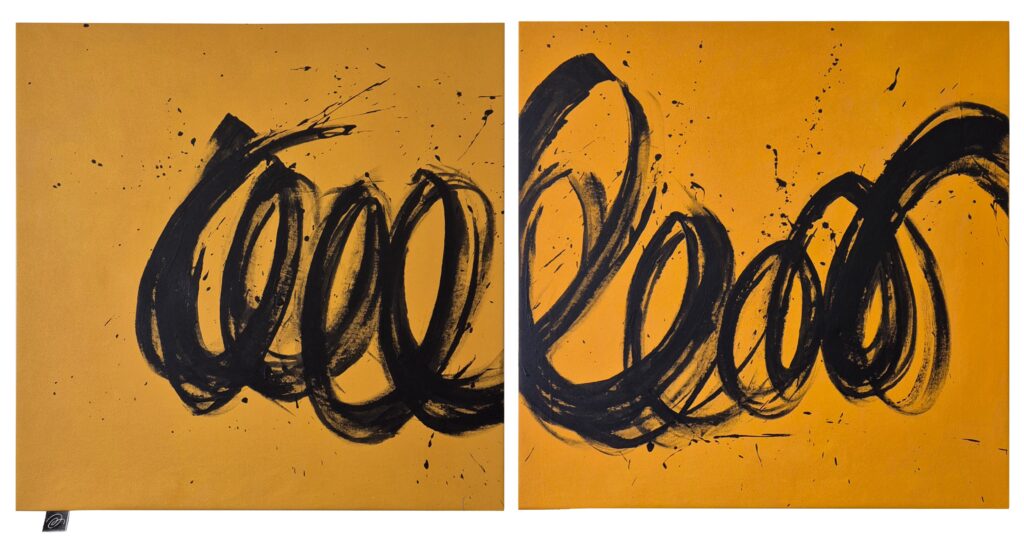
Tidal Composition – Pulse
See Artwork »Like a single breath unfolding across the canvas, Tidal Composition – Pulse captures the rhythm of continuous movement. Expansive black gestures sweep across a vibrant ground, leaving traces of speed, pressure, and intention.
The work reflects an ongoing dialogue between intuition and structure, where each mark responds to the one before it. Both energetic and contemplative, it invites viewers to experience the painting not as a fixed image, but as a moment suspended in motion.
-
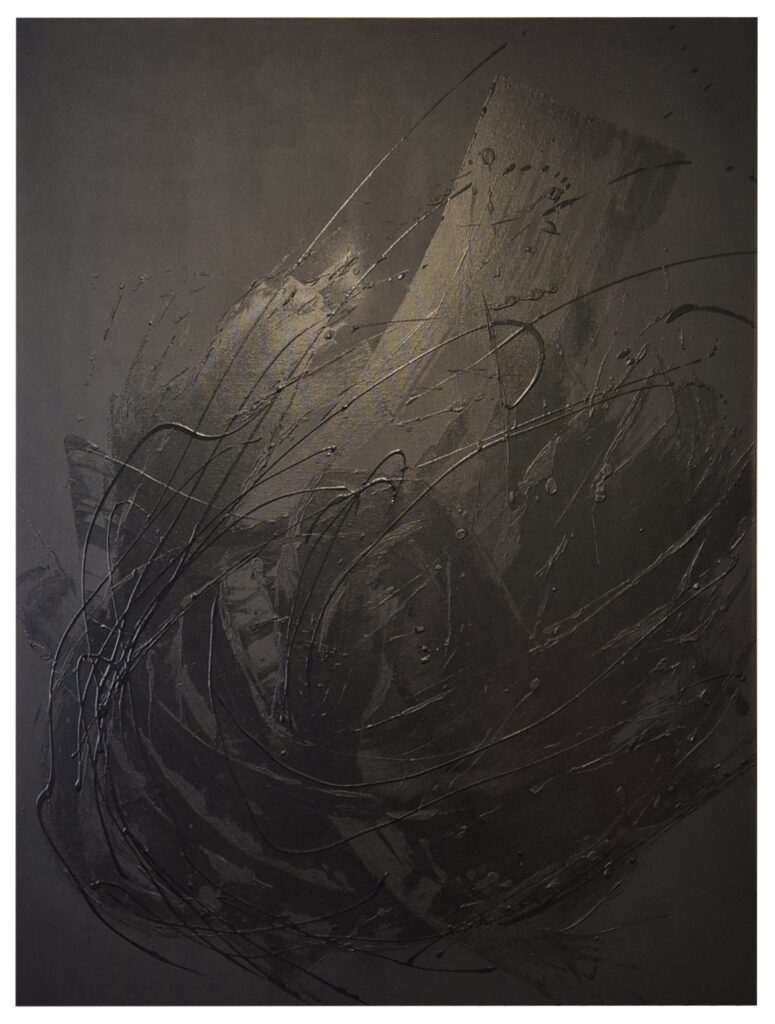
Tempest
See Artwork »Rendered in layered black-on-black tones, Tempest reveals itself slowly as light moves across its textured surface. Sweeping gestures emerge from subtle tonal shifts, creating a composition that is both powerful and restrained.
Rather than depicting a storm, the work evokes the energy that exists within one. The moment where movement, tension, and stillness coexist. Rich in texture and depth, Tempest rewards prolonged viewing, offering a quietly dramatic presence that transforms throughout the day as natural light changes.
-
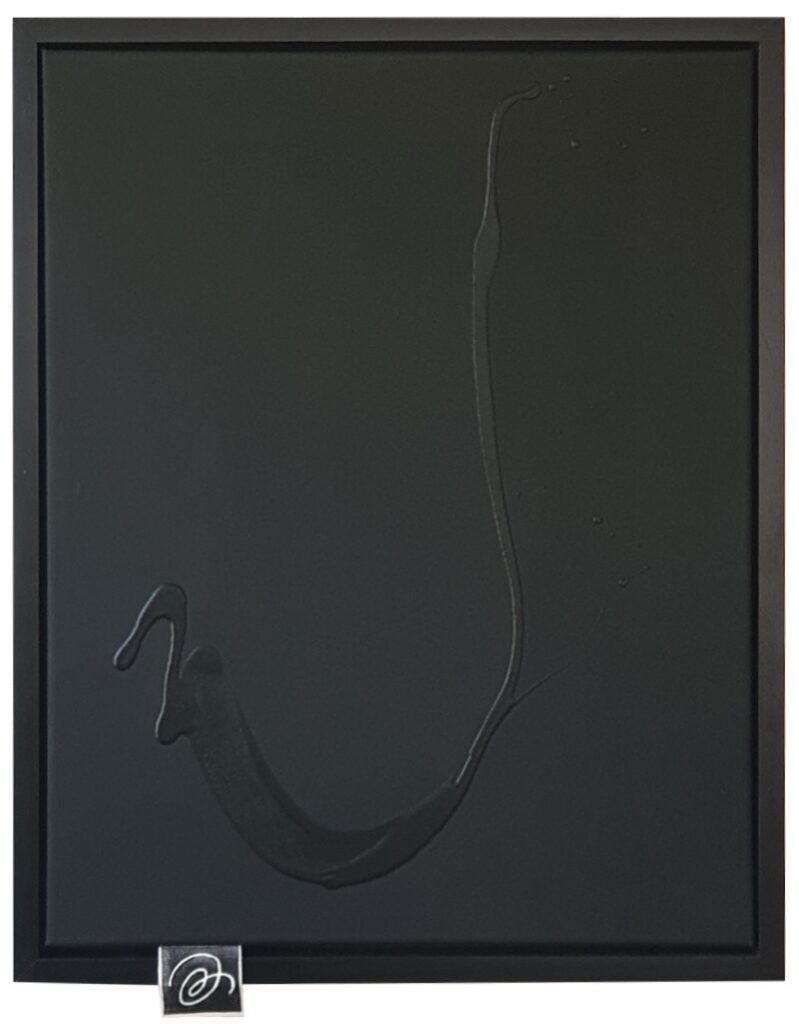
Ballerinas I
See Artwork »Reduced to a single gestural line, Ballerinas I explores the relationship between movement, balance, and space. Its black-on-black surface reveals delicate shifts in texture and light, allowing the work to transform throughout the day.
Elegant in its restraint, the painting demonstrates how a single gesture can carry both energy and stillness, making it a quietly compelling presence within contemporary interiors.
-
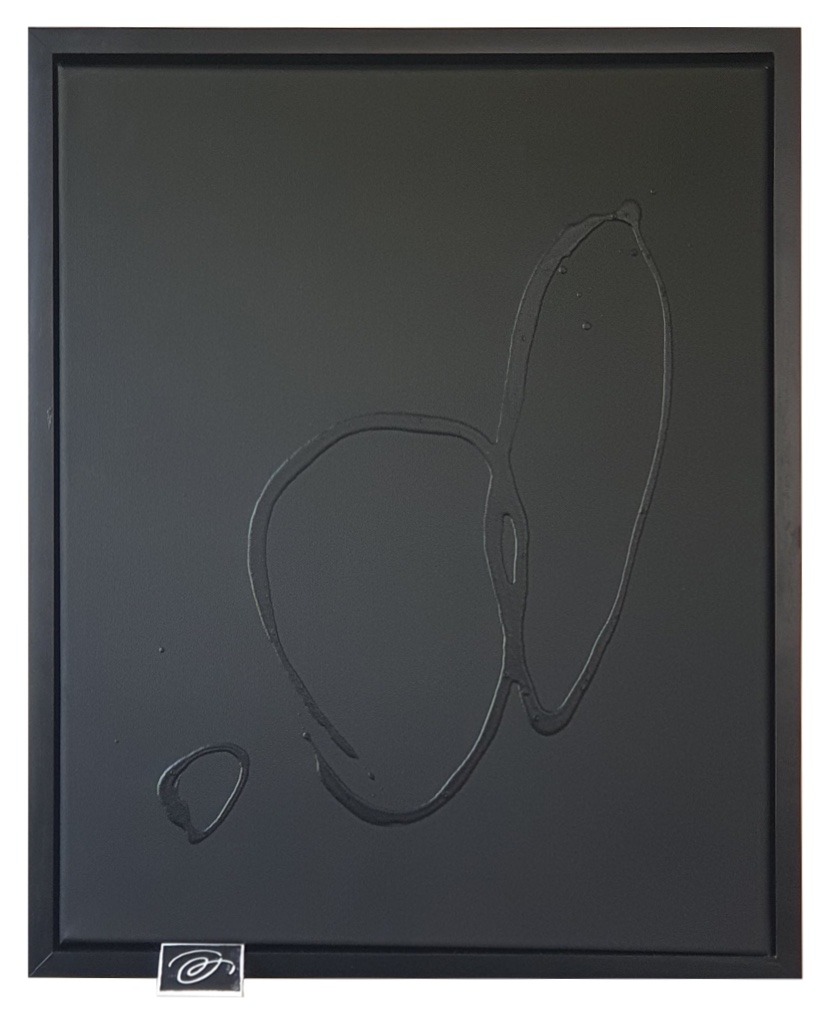
Ballerinas III
See Artwork »Inspired by the movement of a ballerina’s feet as they touch, press against, and lift from the floor, Ballerinas III traces a quiet choreography through fluid black-on-black lines.
The composition explores balance, weight, rhythm, and the fleeting point of contact between body and ground. As light moves across the surface, subtle shifts in texture and sheen gradually reveal the gesture.